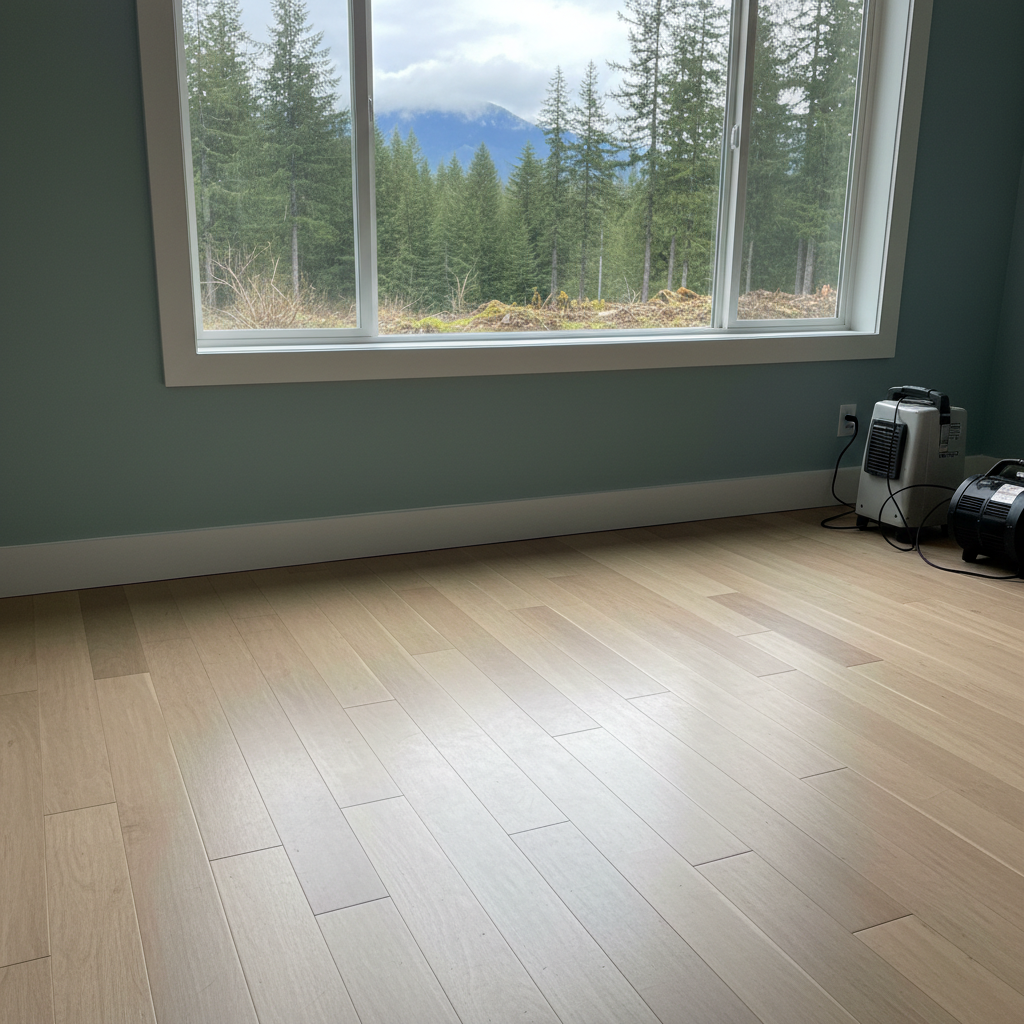
Living out here along the Skykomish Valley means dealing with some heavy weather. Between sudden downpours, saturated mountain soils, and shifting seasonal temperatures, water issues happen. When moisture gets inside your house, you need straight answers fast. Here is what we regularly hear from property owners in Baring, WA dealing with water intrusion.
How quickly does Water Damage actually start turning into mold?
In our damp Pacific Northwest climate, mold does not waste time. Spores can start germinating within 24 to 48 hours of a water leak or flood event. If your subfloor or drywall stays damp past that window, you are facing potential fungal growth. Waiting to see if things air out on their own is a gamble you usually lose. Quick water extraction changes the outcome.
Can I handle the cleanup myself with a shop vac and some box fans?
You can certainly mop up surface puddles, but visible dryness does not mean your house is actually dry. Water travels downward and sideways into places you cannot see, like inside wall cavities, beneath baseboards, and under hardwood flooring. At Grand Harbor Restoration Service, we use moisture meters and thermal imaging to find hidden pockets of dampness. Without commercial dehumidifiers and air movers, structural elements stay saturated and rot from the inside out.
Will my homeowners insurance cover this mess?
That depends entirely on the source of the water. Sudden and accidental issues, like a supply line failure or an appliance leak, are typically covered. Ground-level flooding or surface water coming in from outside usually requires a separate flood insurance policy. Always check your specific declaration page, but do not wait for an adjuster to call before you start mitigating the damage. Most policies require you to take reasonable steps to prevent further loss right away.
What makes Water Damage Restoration in Baring different from down in the city?
Our geography plays a huge role. Many properties here feature crawlspaces that sit low over rocky, heavy soil profiles that retain moisture long after a storm passes. When local rivers swell or heavy runoff hits, high humidity levels outside make natural cross-ventilation much less effective. You have to mechanically pull moisture out of the air, or the structure will hold onto that damp chill for weeks.
How long does the entire drying and restoration process take?
Most standard residential drying setups run between 3 to 5 days. It all comes down to how much water got absorbed, what materials are wet, and how tightly sealed the rooms are. Hardwood floors and thick insulation take longer to dry than bare concrete or drywall. We monitor daily moisture logs until structural materials hit safe, pre-loss levels before we pack up our gear.
Should I throw away water-damaged furniture and drywall?
Not everything has to go, but porous materials demand careful evaluation. Drywall that has wicked up dirty water or stayed wet for days usually needs to be cut out and replaced. Solid wood furniture can often be saved if you dry it slowly and condition it, while particle board furniture tends to swell and fall apart permanently. If insulation gets soaked, it loses its thermal value and harbors bacteria, so it has to be swapped out.
For homes and businesses in Baring, Grand Harbor Restoration Service provides Water Damage Restoration services. If you are facing a cleanup project and need an honest assessment of your property, give us a call and we will help you figure out the next steps.