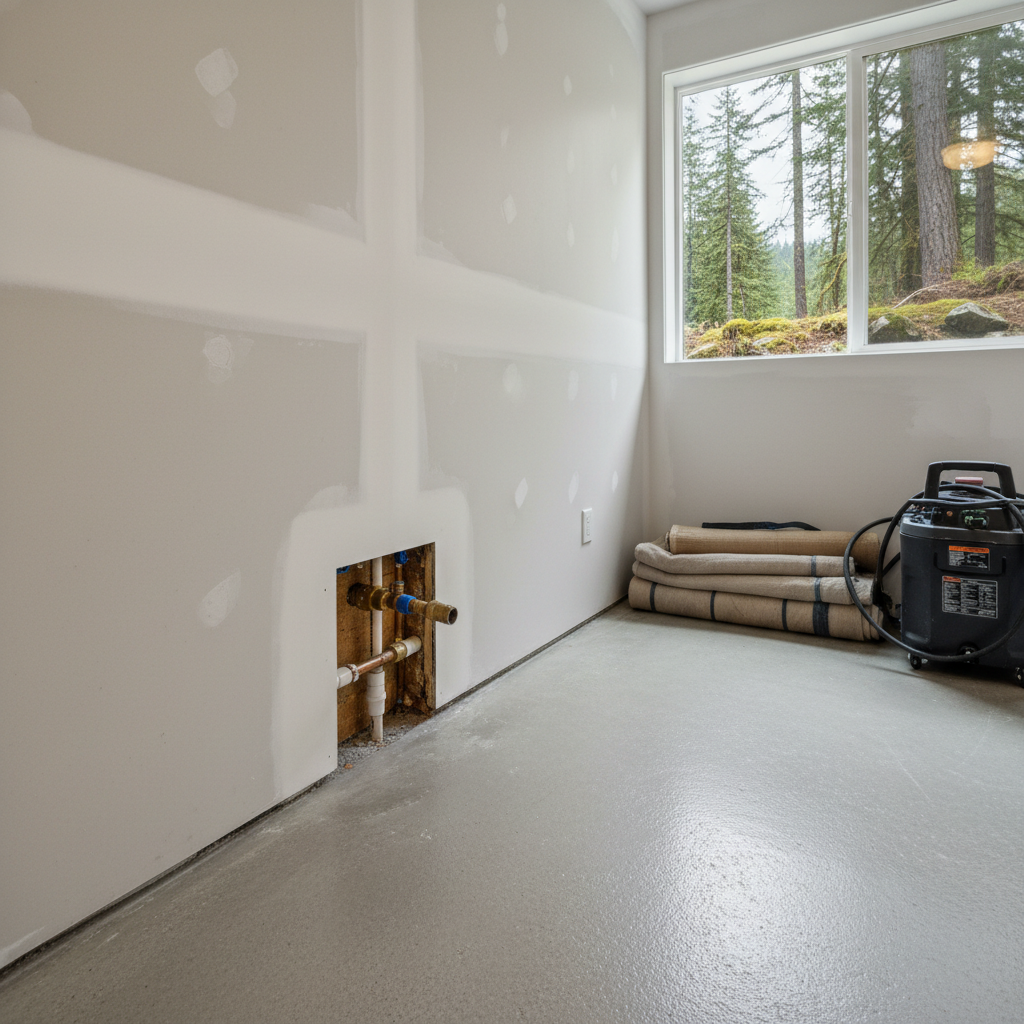
When a water line breaks on a freezing January morning near the Skykomish River, the water damage spreads very fast before anyone can find the main shut-off valve. Winter temperatures in Baring drop quickly, and Grand Harbor Restoration Service has pulled up plenty of soaked subfloors and dealt with the aftermath of frozen plumbing over the years. Homeowners in Baring ask Grand Harbor Restoration Service many questions when a pipe bursts, and these answers cover what to do.
Where is my main water shut-off valve and how fast do I need to close it?
Your main water shut-off valve is usually located where the water line enters your house, often in the crawlspace, garage, or near the front foundation wall. Older Baring homes with a basement or a raised crawlspace typically have the valve tucked right near the front wall facing the street or driveway. You need to close the main water shut-off valve immediately. Every single minute a pipe stays open, hundreds of gallons of water pour into your framing, insulation, and flooring. If you cannot find your valve or it is rusted stuck, grab a wrench or call Grand Harbor Restoration Service out right away.
How do I know if the water damage requires professional cleanup or if I can dry it myself?
A tiny pinhole leak behind a bathroom vanity might just need a box fan and a couple of days to dry out. But if a supply line bursts and dumps water into your walls or ceilings for even twenty minutes, do-it-yourself methods will not cut it. Water travels downward and wicks into drywall, studs, and insulation. Grand Harbor Restoration Service brings in commercial-grade dehumidifiers and heavy-duty air movers that pull moisture out of hidden cavities before mold sets in. If water has soaked into structural wood or insulation, you need professional water damage restoration to prevent rot.
Why do pipes burst so often around here during winter?
We live in an area that gets hit by cold weather blowing down from the Cascades. When temperatures plunge below freezing for a few consecutive nights, uninsulated pipes in crawlspaces, exterior walls, and attics freeze solid. Water expands when it turns to ice, and copper or PEX can only stretch so far before splitting right open. If your crawlspace vents are left wide open during a deep freeze or your exterior hose bibs are not winterized, your Baring home is at high risk for water damage.
How long does the whole repair and cleanup process take?
The plumbing repair itself usually takes a couple of hours, assuming it is a straightforward section of pipe replacement. The structural drying process, however, takes anywhere from three to five days depending on how much water soaked into your building materials. Grand Harbor Restoration Service monitors moisture meters daily until the wood and drywall return to normal atmospheric levels. Reconstruction and drywall patching come after everything is bone dry.
Will my homeowner's insurance cover a burst pipe?
Most standard homeowners policies cover sudden and accidental water damage from a burst pipe, but they rarely cover damage caused by long-term neglect or lack of maintenance. If a pipe bursts because you left your house unheated for weeks, you might run into trouble with the claim adjuster. Document everything with photos before any cleanup starts, and call your insurance agent as soon as the water is shut off to start the claim.
How can I prevent this from happening again next winter?
Insulation is very important in this climate. Wrap your vulnerable pipes in foam lagging, especially any runs traveling through unheated crawlspaces or exterior walls. Keep your crawlspace vents closed during freezing spells, and if a severe arctic blast rolls through Baring, let a couple of faucets drip slowly overnight to keep water moving through the lines. For Baring homes, Grand Harbor Restoration Service provides water damage restoration and prevention advice to make sure your property stays safe.